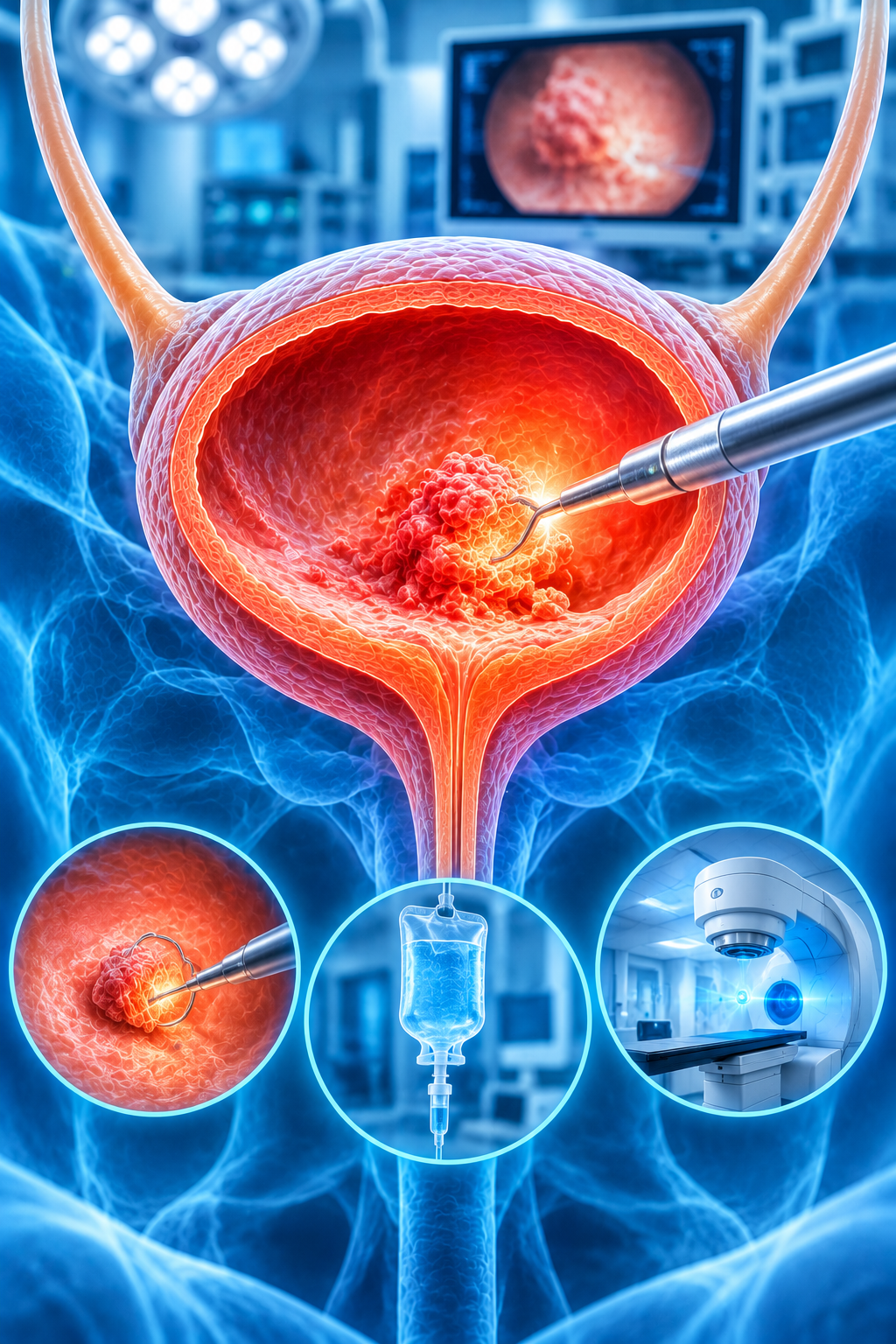
Enlarged Prostate (BPH) Treatment in Indore
An enlarged prostate, medically known as Benign Prostatic Hyperplasia (BPH), is a common condition that affects men, particularly as they get older. It occurs when the prostate gland increases in size and puts pressure on the urethra, making it difficult to pass urine normally.
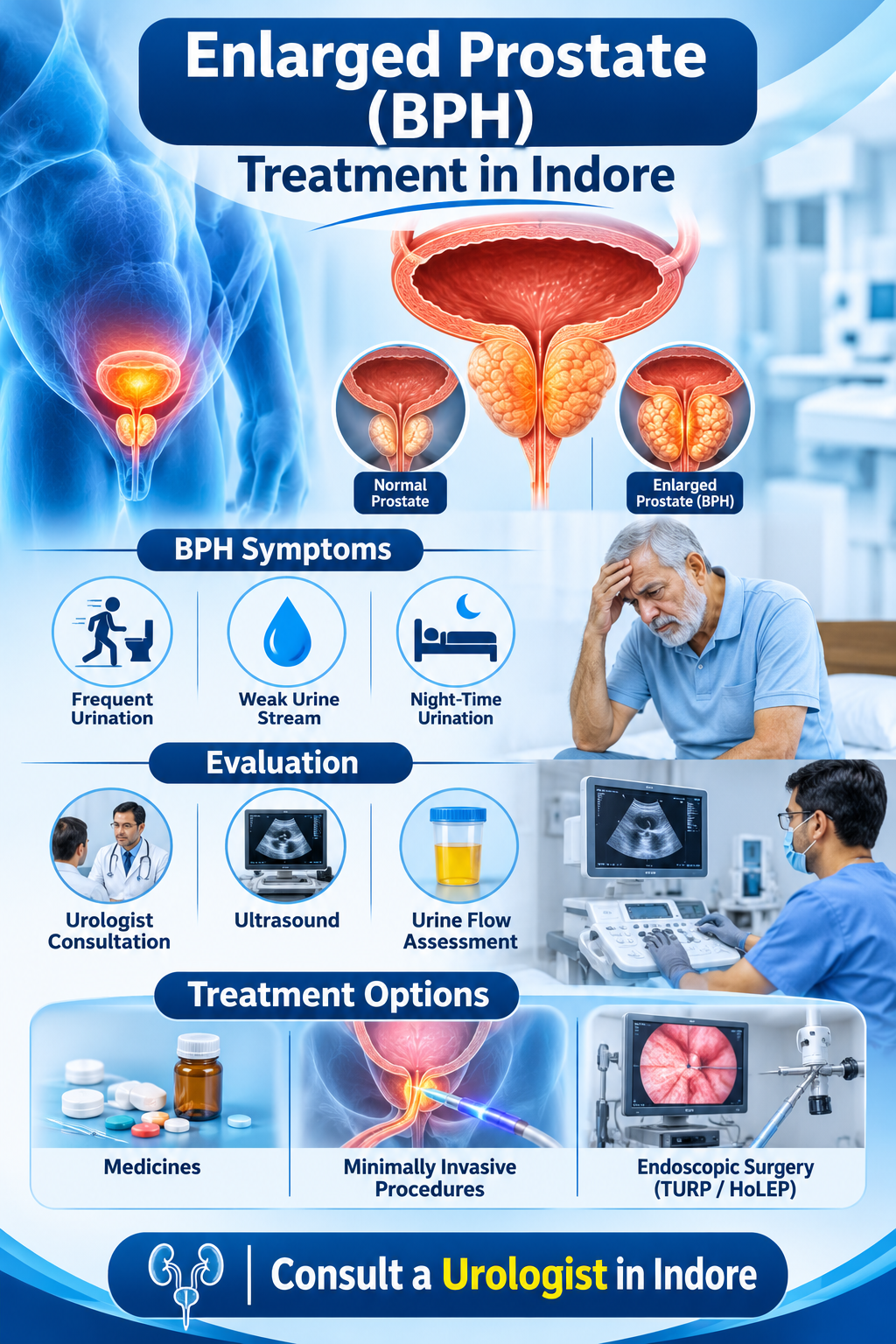
Men experiencing frequent urination, a weak urine stream, difficulty starting urination or incomplete bladder emptying may have symptoms associated with prostate enlargement.
Dr. Satyendra Singh, a Urologist in Indore with qualifications in Uro-Oncology and Robotic Surgery, provides consultation and guidance for patients experiencing various urinary and prostate-related conditions.
What Is an Enlarged Prostate (BPH)?
Benign Prostatic Hyperplasia (BPH) is a non-cancerous enlargement of the prostate gland. The prostate is a small gland located below the bladder and surrounding the urethra.
As the prostate grows, it can narrow the urinary passage and affect normal urine flow. Although BPH is not prostate cancer, its symptoms can interfere with daily activities, sleep and overall quality of life.
Early evaluation by an enlarged prostate doctor in Indore can help identify the severity of the condition and determine suitable treatment options.

Causes and Risk Factors of BPH
The exact cause of prostate enlargement is not fully understood. However, age-related hormonal changes are believed to play an important role.
Some common risk factors include:
Increasing age
Family history of prostate enlargement
Hormonal changes associated with ageing
Obesity and metabolic health conditions
Diabetes and certain lifestyle-related factors
BPH is more common in older men, particularly after the age of 50.
Diagnosis of Enlarged Prostate
Proper diagnosis is important to understand prostate size, urinary symptoms and overall bladder health.
Depending on the patient’s symptoms, medical history and examination, the evaluation may include:
1. Medical History: Understanding urinary symptoms, their duration and their effect on daily life.
2. Physical Examination: A digital rectal examination (DRE) may be recommended to assess the prostate gland.
3. PSA Blood Test: A Prostate-Specific Antigen (PSA) test may help evaluate prostate-related conditions. PSA results alone cannot confirm or exclude prostate cancer.
4. Ultrasound: Helps assess prostate size, bladder condition and urine remaining after urination.
5. Urine Tests: May help identify urinary infections, blood or other abnormalities.
6. Uroflowmetry: Measures the speed and pattern of urine flow.
Not every patient requires all these tests. Investigations are selected according to individual clinical needs.
Enlarged Prostate Specialist in Indore – Dr. Satyendra Singh
Dr. Satyendra Singh is a qualified Urologist with MS and MCh qualifications in Uro-Oncology and Robotic Surgery.
He provides consultation and medical guidance for various urological conditions, including enlarged prostate (Benign Prostatic Hyperplasia), urinary problems and prostate-related conditions.
Men experiencing symptoms such as frequent urination, weak urine flow, difficulty passing urine or incomplete bladder emptying can consult Dr. Satyendra Singh for proper evaluation and guidance regarding suitable treatment options.
The treatment approach focuses on understanding each patient’s condition and recommending options based on individual medical requirements.