Prostate-related problems are common among men, especially as they grow older. Conditions such as prostate enlargement and prostate cancer can affect urinary function, daily activities and overall quality of life. While some prostate conditions can be managed with medication, others may require surgical treatment.
If you are searching for prostate surgery in Indore, understanding the available treatment options, surgical techniques and recovery process can help you make informed decisions about your health.
Modern urology offers several approaches to prostate treatment, including minimally invasive procedures, laser surgery and robotic-assisted surgery. The appropriate treatment depends on the patient’s diagnosis, prostate size, symptoms and overall health.
Dr. Satyendra Singh, MS, MCh (Uro-Oncology & Robotic Surgery), is a Urologist, Uro-Oncologist and Robotic Surgeon in Indore, specialising in the evaluation and treatment of urological conditions.
In this blog, we will discuss different types of prostate problems, when surgery may be required and the available surgical treatment options.
Table of Contents
ToggleWhat Is the Prostate and Why Is It Important?
The prostate is a small gland found in the male reproductive system. It is located below the urinary bladder and surrounds the upper part of the urethra, which carries urine out of the body.
The prostate produces fluid that forms part of semen and supports reproductive function.
As men age, the prostate may increase in size or develop other medical conditions. These changes can sometimes affect the normal flow of urine.
Some common prostate conditions include:
- Benign Prostatic Hyperplasia (BPH): Non-cancerous enlargement of the prostate.
- Prostatitis: Inflammation of the prostate gland.
- Prostate Cancer: Abnormal growth of cells within the prostate.
It is important to understand that an enlarged prostate is not the same as prostate cancer. Both conditions require proper medical evaluation and may have different treatment approaches.
Common Symptoms That May Indicate a Prostate Problem
Prostate-related conditions can cause different urinary and reproductive symptoms. Some symptoms develop gradually, while others may become noticeable over a short period.
Common warning signs include:
- Frequent urination, especially at night.
- Difficulty starting urination.
- Weak or interrupted urine flow.
- Feeling that the bladder is not completely empty.
- Sudden or urgent need to urinate.
- Dribbling after urination.
- Pain or discomfort during urination.
- Blood in the urine or semen.
These symptoms do not necessarily indicate prostate cancer. However, persistent symptoms should be evaluated by a qualified urologist.
If you experience an inability to pass urine, seek immediate medical attention.
When Is Prostate Surgery Required?
Not every prostate condition requires surgery. In many cases, doctors initially recommend medication, monitoring or lifestyle modifications.
However, surgery may be considered when symptoms become severe, medications do not provide adequate relief or complications develop.
Some situations in which prostate surgery may be recommended include:
1. Severe Urinary Problems
When an enlarged prostate significantly blocks the urine flow, patients may experience difficulty emptying their bladder.
2. Recurrent Urinary Retention
Repeated inability to pass urine may require further evaluation and surgical treatment.
3. Recurrent Urinary Tract Infections
Prostate enlargement can contribute to incomplete bladder emptying, increasing the risk of recurrent urinary infections.
4. Bladder Stones
Long-term obstruction may contribute to bladder stone formation, sometimes requiring surgical intervention.
5. Kidney Function Problems
Severe urinary obstruction may affect kidney function and require timely treatment.
6. Prostate Cancer
In selected patients with localised prostate cancer, surgical removal of the prostate gland may be recommended as part of cancer treatment.
The final treatment decision depends on detailed investigations and individual medical assessment.
Different Types of Prostate Surgery
Modern urology offers several surgical techniques for treating prostate conditions. The choice depends on whether the patient has prostate enlargement or prostate cancer.
1. TURP (Transurethral Resection of the Prostate)
TURP is a commonly used surgical procedure for treating urinary symptoms caused by benign prostate enlargement.
During this procedure, a specialised instrument is passed through the urethra to remove obstructive prostate tissue.
Potential benefits include:
- Improved urine flow.
- Relief from urinary obstruction.
- No external abdominal incision.
- Improvement in symptoms caused by prostate enlargement.
TURP may be recommended for appropriately selected patients with moderate-to-severe urinary symptoms.
2. HoLEP (Holmium Laser Enucleation of the Prostate)
HoLEP is a laser-based surgical procedure used to treat benign prostate enlargement.
During the procedure, a holmium laser helps separate and remove enlarged prostate tissue that is obstructing urine flow.
Potential advantages include:
- Effective removal of obstructive prostate tissue.
- Use in patients with different prostate sizes.
- Minimally invasive surgical approach.
- Improvement in urinary symptoms.
The suitability of HoLEP depends on the patient’s condition, available technology and the surgeon’s expertise.
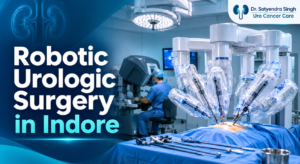
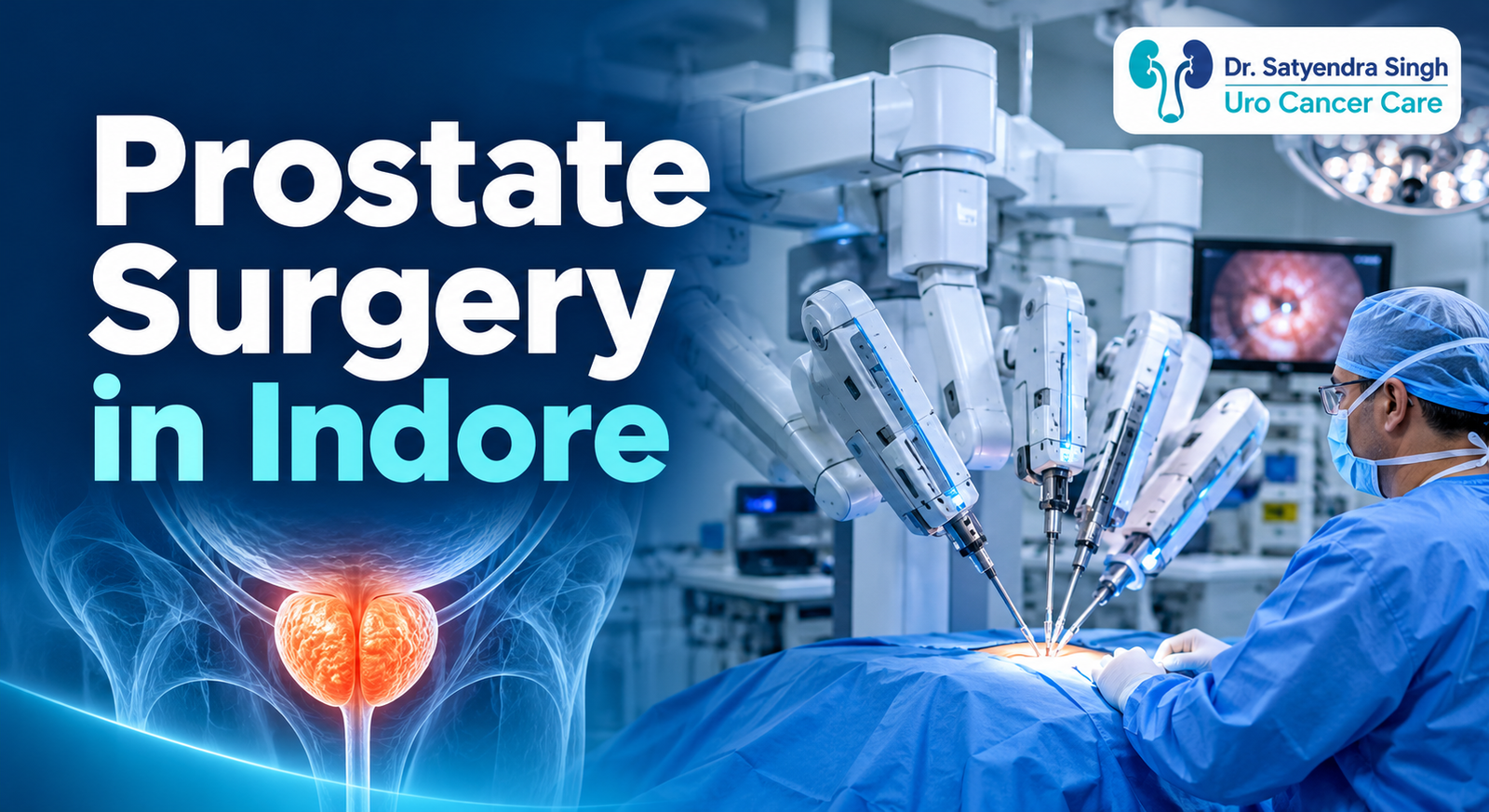
3. Robotic Prostate Surgery
Robotic-assisted prostate surgery is an advanced surgical technique used in selected prostate conditions, particularly prostate cancer.
One commonly performed procedure is robotic-assisted radical prostatectomy.
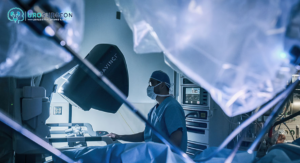
During this procedure, the surgeon controls specialised robotic instruments through a console to remove the prostate gland and, when indicated, nearby tissues and lymph nodes.
Potential advantages may include:
- Smaller surgical incisions.
- Magnified three-dimensional visualisation.
- Greater instrument flexibility.
- Potentially reduced blood loss.
- Minimally invasive surgical access.
In selected patients, nerve-sparing techniques may be considered to help preserve urinary and sexual function.
Robotic surgery is not suitable for every patient, and the expected benefits depend on the cancer stage, surgical expertise and individual health factors.
4. Open Prostate Surgery
Open prostate surgery involves making a larger incision to access the prostate.
Simple prostatectomy may be considered for certain patients with significantly enlarged prostates when other approaches are unsuitable or unavailable.
It is important to distinguish simple prostatectomy, which removes obstructive prostate tissue, from radical prostatectomy, which removes the prostate gland as a treatment for selected prostate cancer cases.
Prostate Enlargement Surgery vs Prostate Cancer Surgery
Many patients use the term prostate surgery without knowing that different procedures are used for different prostate conditions.
Here is an important distinction:
Prostate Enlargement (BPH)
- Non-cancerous prostate growth.
- Can obstruct the flow of urine.
- May be treated with medication or surgery.
- Procedures may include TURP, HoLEP and selected simple prostatectomy techniques.
Prostate Cancer
- Involves abnormal cancer cell growth.
- Requires cancer-specific evaluation and staging.
- Treatment may include active surveillance, radiation therapy, medication or surgery.
- Radical prostatectomy may be recommended for selected patients.
An accurate diagnosis is essential before selecting any treatment.
What Happens Before Prostate Surgery?
Before recommending prostate surgery, the doctor performs a detailed evaluation to understand the underlying condition.
Depending on the patient’s symptoms and medical history, investigations may include:
PSA Blood Test: Measures prostate-specific antigen levels and helps assess prostate-related conditions. An elevated PSA does not automatically mean cancer.
Ultrasound: Helps evaluate prostate size, bladder condition and urine remaining after urination.
MRI Prostate: May be recommended to investigate suspected prostate cancer and assess the prostate in greater detail.
Urine Examination: Helps identify urinary infections and other abnormalities.
Uroflowmetry: Measures urine flow rate and helps assess possible urinary obstruction.
Prostate Biopsy: May be recommended when clinical findings suggest the possibility of prostate cancer.
Not every patient requires all these tests. The doctor recommends investigations based on individual clinical findings.
Recovery After Prostate Surgery
Recovery depends on the type of procedure, the patient’s general health and the complexity of surgery.
After prostate surgery, patients may receive instructions regarding:
- Medication and pain management.
- Catheter care, if required.
- Maintaining proper hydration.
- Wound care and hygiene.
- Avoiding strenuous physical activity.
- Follow-up appointments and investigations.
Some patients may experience temporary urinary urgency, discomfort or leakage during recovery.
Sexual side effects, including changes in ejaculation or erectile function, may also occur depending on the procedure.
Patients should discuss possible complications and expected recovery with their surgeon before undergoing treatment.
Why Consult Dr. Satyendra Singh for Prostate Treatment in Indore?
Choosing the right specialist is an important step when dealing with prostate-related conditions.
Dr. Satyendra Singh is an MS, MCh (Uro-Oncology & Robotic Surgery) specialist in Indore, with expertise in urology, uro-oncology and robotic surgery.
Patients looking for a Prostate Surgeon in Indore can consult a qualified specialist to understand their symptoms, diagnostic reports and available treatment options.
A specialist consultation can help patients understand:
- Whether the condition is prostate enlargement or prostate cancer.
- Whether medication or surgery is appropriate.
- Which surgical technique may be suitable.
- The potential benefits and risks of treatment.
- Expected recovery and follow-up care.
The goal is to identify the underlying condition and develop an appropriate treatment plan based on the patient’s medical needs.
Frequently Asked Questions About Prostate Surgery in Indore
1. When does an enlarged prostate require surgery?
Surgery may be recommended when medications do not provide sufficient relief, urinary obstruction becomes severe or complications such as recurrent urinary retention, bladder stones or kidney problems develop.
2. Is prostate surgery painful?
Prostate surgery is generally performed under anaesthesia. Some discomfort, soreness or urinary irritation may occur during recovery. Medication is provided to manage postoperative discomfort.
3. What is the difference between TURP and robotic prostate surgery?
TURP is generally used to remove obstructive tissue in benign prostate enlargement. Robotic-assisted radical prostatectomy is used in selected prostate cancer cases to remove the prostate gland. They treat different conditions.
4. Is robotic prostate surgery safe?
Robotic-assisted prostate surgery is an established surgical approach. However, like every major operation, it carries potential risks, including bleeding, infection, urinary leakage and changes in sexual function. Individual risks should be discussed with the surgeon.
5. Can an enlarged prostate become prostate cancer?
No. Benign prostate enlargement does not turn into prostate cancer. However, both conditions can occur in the same person and may have overlapping symptoms.
6. How long does it take to recover after prostate surgery?
Recovery varies according to the surgical technique and the patient’s health. Some patients return to routine activities within a few weeks, while others may require a longer recovery period.
7. Which doctor should I consult for prostate problems in Indore?
A qualified urologist or uro-oncologist can evaluate prostate-related symptoms, recommend investigations and explain suitable treatment options.
8. Is surgery the only treatment for prostate enlargement?
No. Depending on symptom severity and clinical findings, treatment may include observation, lifestyle changes, medication or surgical procedures.
Consult Dr. Satyendra Singh for Prostate Surgery in Indore
Prostate conditions can affect urinary health and overall quality of life. Early evaluation, accurate diagnosis and appropriate treatment planning are important for managing prostate-related problems.
Whether you are experiencing symptoms of an enlarged prostate or have been diagnosed with prostate cancer, consulting an experienced urology specialist can help you understand your treatment options.
Dr. Satyendra Singh
MS, MCh (Uro-Oncology & Robotic Surgery)
Urologist | Uro-Oncologist | Robotic Surgeon
Indore, Madhya Pradesh
Website: https://urocancercare.com/
Book a consultation to discuss prostate-related health concerns and receive medical guidance based on your condition.
Medical Disclaimer: This article is intended for general educational purposes only. It does not replace professional medical advice, diagnosis or treatment. The appropriate treatment must be determined by a qualified medical professional after individual evaluation.